Istanbul

Istanbul

Istanbul is the larges city in turkey, constituting to the country’s economic, culture, and history. Meanwhile Istanbul reached a population of 14 million people in the city, and make the city the largest one in Europe.

Istanbul is a transparent city that is build on both side of the Bosporus, the worlds most busiest motorway. The Bosporus waterway divides Istanbul into Europe part, as soon you cross on the Bosporus Bridge or the second bridge Faith Sultan Mehmet Bridge to the other side of Istanbul, Asia start. It is important to know if you going to hire cars, some rental companies have a clause with restrictions on the Asian side of Istanbul. The City had a strong position along the historic Silk Road network to Europe and the Middle East, and the only sea route between the Black Sea and the Mediterranean.

Approximately 11.6 million people visitors arrived in the City in 2012 after it was named a European Capital of Culture. Making the city the world’s 5th most popular tourist destination. Although the Republic of Turkey established capital in Ankara, places and imperial Mosques still line Istanbul’s hills as visible remainder of the city’s previous roll.

History

However the history of Istanbul begins around 660 BC, when the Greek settlers from Megara start to build Byzantium of the European side of the Bosporus. The settlers proceeded to build an acropolis adjacent to the Golden Horn on the site of the early Thracian settlements, fuelling the nascent city’s economy. The City experienced a short period of Persian rule at the turn of the 5th century BC. But the Greek recaptured it during the Greco Persian War.  Byzantium then continued as part of the Athenian League and its successor, the second Athenian Empire, before ultimately became independent in 355 BC. Long allied with the Romans, Byzantium officially became a part of the Roman Empire in 73 AD.

Geography

Istanbul is located in north western Turkey in the Marmara Region in a total of 5.343 square kilometres. The Bosporus connects the Sea of Marmara to the Black Sea. Istanbul is located near the North Anatolian Fault, close to the boundary between the African and Eurasian Plates. This fault zone, which runs from northern Anatolia to the Sea of Marmara, has been responsible for several deadly earthquakes through the city’s history. Between the most devastating of this tragic seismic activity was in 1509 earthquake, which caused a Tsunami that broke over the wall of the city and killed more than 10.000 people. More recently, in 1999, an earthquake with its epicentre in zmit left 18.000 people dead. The people of Istanbul stay concerned that an even more catastrophic seismic event may be in the near City future, as thousands of structures recently build to accommodate Istanbul’s rapidity increasing population may not have been constructed properly.

Climate

Istanbul has a border line Mediterranean Climate and humid subtropical climate. Since it has only two warm summer month with less than 40mm of rain fall, the city can not be classified as solely Mediterranean or humid subtropical. Due its size and location Istanbul has a microclimate. Northern part of the City expresses characteristics of oceanic climate because of the humidity of the Black Sea. The climate to the more populated areas of the city of the south is warmer and less affected by humidity.

Winter are colder in Istanbul than in most other cities around the Mediterranean Basin, with low temperatures averaging 4-5°C. Spring and autumn are mild but often wet and unpredictable; chilly winds from the north west and warm guts from the south, it could happen on the same day. The highest and lowest temperature ever recorded in the city are 40°C and -16.1°C.

Culture

Istanbul was known as cultural hub, but its cultural scene stagnated after the Turkish Republic shifted its focus towards Ankara. The new national Turkish Government established programs that served the oriental Turks towards music traditions, speciality those originating in Europe.

Coinciding with this cultural reemergence was the establishment of the Istanbul Festival, which began showcasing a variety of art from Turkey and around the world in 1973. From this flagship festival came the International Istanbul Film Festival and the Istanbul International Jazz Festival in the early 1980s. With its focus now solely on music and dance, the Istanbul Festival has been known as the Istanbul International Music Festival since 1994. The most prominent of the festivals that evolved from the original Istanbul Festival is the Istanbul Biennial, held every two years since 1987. While its early incarnations were aimed at showcasing Turkish visual art, it has since opened to international artists and risen in prestige to become among the elite biennales, alongside the Venice Biennale and the São Paulo Art Biennial.


External link

Official website of the Istanbul Metropolitan Municipality

Istanbul

Istanbul Metropolitan Municipality: Istanbul Bulteni Magazine official website

For more information I refer to:

Wikipedia


My travel experience


When I arrived in Istanbul at the Airport I have have been very surprised that German was widely spoken, and English too. At the airport are many Taxi stands who offer transport into the city and to your booked accommodation, before you take the first deal you have to check the prices with different companies usually the first offer is to high and the price is coming down if you compare. The town has a lot of history to offer such as the Sultans Palace, or the Blue Mosk is only few ot the attractions, definitely you should visit one of the historic Souk’s, I went to one in the historic part of Istanbul.

Haikou


Haikou


Haikou is the capital of Hainan province, P.R.C. It is situated on the north coast of Hainan. The northern part of the city is the district Haidian Island, which is separated from the main part of Haikou by the Haidean River, a branch of the Nandu.


Haikou was originally a port city. It still plays a important part in the trading and many goods goes through the he ports.

But today Hainan is one of the tourist meccas of China with white sandy beaches and crystal clear water. Many international Hotels are located on the beach site.


Arriving at Haikou 

Hainan is not to far from Hong Kong, it takes only a 1.5 h flight to Haikou. I applied directly in Hong Kong by the Chines authority for my Tourist visa which got issued after 3 days, the process was very convenient and easy, pass photos could be made on the premisses and copies which are needed too, you need some extra cash for the extras.

As soon i arrived at Hainan International Airport I felt the difference of the heat, it is much warmer and little more humid, I felt it very comfortable. From the Airport I took a taxi to my accommodation, Sheraton Hotel  we drove for around 45 mins and the taxi driver charged me 160 RMB. The Hotel is directly beside  the beach, even so the out door facilities are in a top condition.

Climate

 Haikou is on the northern edge of the torrid zone, and is part of the international Inter-tropical zone. April to October is the active zone for tropical storms and typhoons, most of them occur from August to September. May to October is the rainy season with the most rainfall.

Despite his location, the city has a subtropical climate with some strong monsoonal influences. However the area has hot summers and warm winters, usually with high humidity.. Extreme temperatures can range from 2.8 to 39.6 C. From June thru October torrential rain may occur, with 7 days annual rain fall.

Nightlife

Haikou has a very active nightlife that continues each evening until dawn. Bars are patronized until after midnight. Road side BBQ sites are very common through the city and offer some snack food even full meals, I dried few of the stands the food was very tasty a very good option if there is not much time to go for a restaurant for lunch or dinner.  Sometimes they comprise tables, plastic chairs and a restaurant set up. This business operate from around9.00 am to 3.00 am.

By Air

 Haikou is served by Haikou International Airport, which is located 25 km, 16 mi from the city. In front of the terminal are waiting licensed taxi which will bring you to your accommodation in Haikou.

Shuttle buses are waiting beside the International terminal which will bring you to the city, to the main bus terminal. If your accommodation is located close to the city it is more convenient and much cheaper to take a Taxi from the main bus terminal than from the Airport.

External link

Haikou Government (Chinese)

Haikou Government (English)

Haikou free trade zone

Sheraton Resort Hotel


For more information I refer to Wikipedia

Continue reading “Haikou” »

Sai Kung

Sai Kung


Sai Kun is the second largest district in the Hong Kong area. It compromises the southern half of Sai Kun Peninsula and Clear Water Bay Peninsula in the new territories plus a strip to the east of Kowloon. The district has the second youngest population and residents. It consists around 70 islands of different sizes.

Sai Kun town is a former fishing village, and is a heaven for Seafood lover, in front of the promenade are the best restaurants Sai Kun has to offer with fresh fish specialty’s and big aquariums with all kind of fish, mussels, and alike.

Sai Kun has some of the most beautiful and cleanest beaches in Hong Kong, (Clear Water Beach1 &2, Silver-strand Beach, Tai long Wan or Big Wave Beach)

Sai Kun District is served by Sai Kun Magazine a free distributed English newspaper.


Geography

In contrast of Hong Kong and Kowloon Sai Kun has a remote and idyllic costal area, with charming small Villages beside remote beaches and stunning seascapes. The locals describe Sai Kun as the last untouched back garden of Hong Kong.


Transport

The MTR system has currently 4 stations in Tseung Kwan O New Town. The new Town is also served by comprehensive bus network that connects it to Kowloon via several main roads including Tseung Kwan O Tunnel and Po Lam Road.

The nearest MTR station to Sai Kun is Hang Hau.


The most beautiful places in Sai Kun can only reached on foot or by boat. Where a destination is accessible by public transport, it is usually served via a complicated network of bus routs.

Some useful information about bus routes could be found here 


Local and tourist attractions

There are numerous cultural sites, and country parks in the Sai Kun Peninsula:


Sheung Yiu Folk Museum

Sai Kun Outdoor Recreational Centre

Sai Kun East and West Country parks

Jin Island or Tiu Chung Chau

Leung Shuen Wan Tin Hau Temple

Jockey Club Kau Sai Chau Public Golf Course


External Link


Sai Kun Magazine

District Council website 

Explore Sai Kung 

MTR


Cheung Chau

Cheung Chau


Cheung Chau is a small island 10 km south of Hong Kong. It has been inhabited for longer than most places in the territory of Hong Kong. There are living around 23.000 people on the Island in 2006. Administratively, it is part of the Island district.


Economy


Under the terms of the 1898 Second of Convention of Peking, the New Territories and 200 smaller islands including Cheung Chau were leased to the United Kingdom for 99 years at that time. Cheung Chau was mainly a fishing village. People from other places in South of China have settled the Island; for example Hoklo, they are mainly fishing people, Hakka people; Chiu Chau; and Yue Ca. The Island slowly evolved into commercial hub with merchants selling supplies to the local fishing people, boat repairs and fishing gear as well as part to do business and small farmers nearby on Lantau Island.


Transportation


First Ferry operates in between Central and Cheung Chau from the Ferry pier in Central. The Ferry run approximately every 30 minutes, depending time of the year. The trip of about 20 km takes around 55 minutes but it depend on weather and sea condition.


Bun Festival


The annual Cheung Chau Bun Festival is a festive celebration, which include a parade which start at 10.00 am on that day. It get extreme busy on that day I recommend an early start into the day otherwise the queue at the pier is as long as the Warf it self. Most famously including young children dressed as famous characters doing impossible balancing acts.

The highlight of this festival is climbing up the bun tower at midnight, the higher the competitor climb and the more buns he collects from the different level the more points he gains. The buns are marked on the back and get counted as soon the competitors get safely back on the ground after be bell sounded.


External Link


Cheung Chau Bun Festival

Gertrude Saddle

Gertrude Saddle hike is the only day hike in Fiordland, which offers at the ridge free few to Milford Sound and the Tasman Sea. The track start to the right of the Homer Hut, a green post indicates the entrance into the Valley. There is a beaten track to the end of the valley, close to the end of the valley are stone markers visible, usually they are placed on top of boulders and always visible. The last 1.5 km’s are taking much more time than expected, it get very steep and the track leeds over exposed sections, the last 200m before you get to Black Lake you have to walk over a blank rock which could be a bit slippery after rain, extra caution required at this part. At Black Lake keep to the right once more walk up the granite slope this time there is a steal rope attached to hold on. From here the saddle is already visible and not to far away, keep orientation on the stone marker to get up to the Saddle. On top of the Saddle are 2 spots to pitch up the tent if you like to spend over night, I really enjoy camping up there awesome night sky and beautiful sun sets could be seen from here.

Cleddau Valley

The day started with sunshine what is not common in Milford Sound at this time of the year. I decided to go for a day walk into the Cleddau Valley, just around the next corner. A good starting point is the Blue Duck Cafe and Bar in Milford City, where food and refreshments are available for a day walk.

There is only one road which is going to the Cashem State Highway 94 back to Te Anau. There are many interesting stops on the way, I suggest to stop at Deep Water Baisin to take a close look to our rock lobster fishing fleet, Little Tahiti is not far away just opposite the quarry on the main road, few km’s up the road is the historical swing bridge.  The next stop will be the Cashem.

There start the walk into the Cleddau Valley, follow the round course as soon you reach the 2nd bridge, climb the fence and walk up stream, keep on the right sight of the river it is much easier to walk up stream, there is no marked route to the end of the valley.

I recommend to do this hike only if there was no rain for a few days and the water level in the river is very low. After heavy rain the river get a current stream it is impossible and unsafe to make any crossings.

The hike is not to underestimate and take from the Blue Duck return easily 9 h for 29km’s

Inquire first about the weather condition before heading out.

Hong Kong, Macau, part 2

After a long time of preparation for my holiday’s I will visit Hong Kong and Macau for my 2nd time. This time I will stay for 3 weeks in Hong Kong and 1 week in Macau to get in touch with people and see more of the culture and history of this beautiful place. There are a few day walks to explore around HK such as Devils Peak or old HK with some historic houses dating back to colonial times. Or see a concert of one of the great and famous artists in HK would be awesome. In Macau is one famous beach at Taipa Island I want to see, even though the night sky line of the amusements in Macau. There is so much to discover and see, may 4 weeks are not enough time again. I look forward for this amazing trip, and see all my friends too.

Harrison Cove

This trip was one of my day trips in Milford Sound to discover Harrison Cove where I spend the whole day on the beach to observe the wild live and find the remains of the former sealing station. Harrison Cove used to be one of the most busiest sealing station in New Zealand Harrison. Fure seal fat has been modified and was used to lighten streets in UK Cove, and the fure was used in the fashion industry, fure seal have one of the densest fure in the world and keep extreme warm. Harrison Cove  is named after Captain John Harrison which invented the first ship chronometer, he build his first longcase clock 1713 with the age of 20.

I refer to an article I found, John Harrison and the longitude problem – national museum to read the whole story about one of our greatest sailor and inventor in sailing.

Lake Marian

Lake Marian is a lake in the Darran Mountains in the hart of Fiordland National Park in the South of New Zealand.

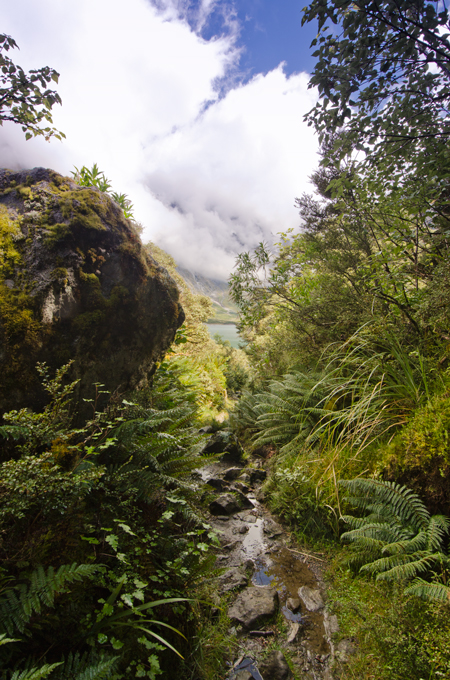
If you have no transport option from Te Anau www.tracknet.co.nz is the best choice to get to the car park at the entrance to Hollyford Valley. From there it take a 1.5h walk to the lake, after around 20 minutes walk you get the first glimpse of the Marian Creek which is a good oportunity for a short photo stop.  From there on the track is well marked and sometimes you have to pass gravel pits. The tramping track is not very challenging, in dry conditions, after heavy rain it get very dirty on some section of the track just before you get out of the forest.

If you like camping in the nature this is the best lace to be.


Portfolio of the Photographer Frank Widmer